Buying an investment property gets frustrating when your personal tax returns don’t show the income…
Can I Qualify for a DSCR Loan if the Rental Property Is Currently Vacant?
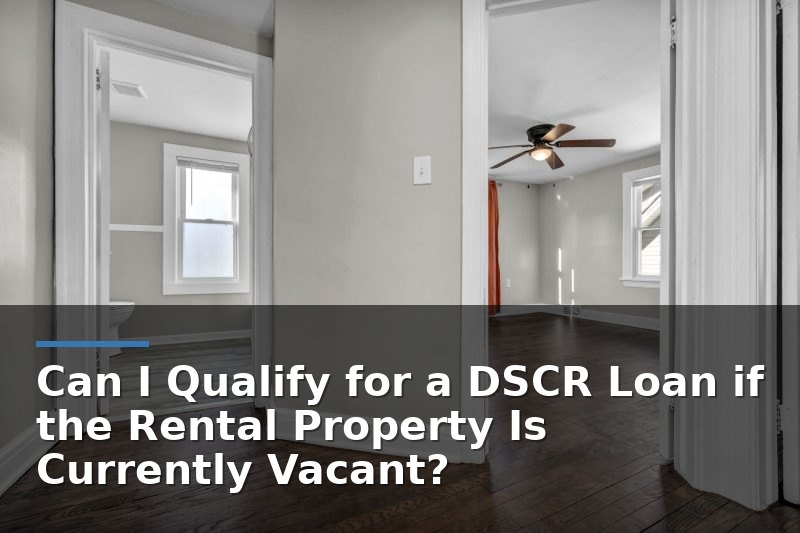
A vacant rental property can make financing feel harder because there isn’t a current tenant or lease showing income.
You may qualify for a DSCR loan on a vacant rental property if the lender can use the property’s supported market rent and the home meets the program’s condition, credit, reserve, and cash flow requirements.
In this guide, I’ll explain how lenders calculate DSCR without a tenant, what documents may be needed, and what can stop the loan.
Key Takeaways
- Vacancy: A property doesn’t always need an active tenant to qualify for a DSCR loan.
- Rental Income: The lender may use market rent from the appraisal instead of an existing lease.
- Property Condition: The home generally needs to be safe, functional, and ready to rent.
- Requirements: Credit, reserves, down payment or equity, and property cash flow still matter.
- Guidelines: Vacancy rules vary by lender, loan purpose, property type, and investor guidelines.
Quick Answers
- Do I need a signed lease? Not always. Some DSCR lenders can qualify a vacant property using the appraiser’s market rent estimate.
- Who determines the expected rent? A licensed appraiser typically reviews comparable rentals and provides a supported market rent.
- Does vacancy automatically cause a denial? No. But the lender may apply different documentation, reserve, or cash flow rules.
- Do I need personal employment income? DSCR programs commonly focus on property income instead of traditional personal income, but program rules vary.
I’m David Krichmar (NMLS# 293883) with Legend Lending Corp. I’ve spent 26 years helping borrowers work through files that don’t fit inside the standard mortgage box.
Vacant rental properties are one of those files.
They’re not impossible.
They just need the right setup.
How Does a DSCR Loan Work on a Vacant Property?
A DSCR loan measures whether a rental property’s income can support its monthly housing expenses.
The basic calculation compares qualifying monthly rental income to the property’s monthly payment.
That payment commonly includes:
- Principal and interest
- Property taxes
- Homeowners insurance
- Flood insurance, when required
- Homeowners association dues, when applicable
Here’s the issue with a vacant property:
There isn’t rent coming in today.
So the lender has to determine what the property should reasonably rent for.
Many lenders do this through the appraisal. The appraiser reviews comparable rental properties and provides a market rent estimate. Depending on the property type, this may be documented on a single-family rent schedule or a comparable multifamily appraisal form.
The lender may then apply its own calculation to that market rent. Some programs use the full eligible amount. Others apply a vacancy or expense factor.
That difference matters.
A property can look profitable based on the advertised rent but fall short after the lender applies its guidelines.
For a broader program overview, review my DSCR home loan program.
Purchase and Refinance Rules Can Be Different
A vacant property can be reviewed differently depending on what you’re trying to do.
Buying a Vacant Rental Property
For a purchase, the lender may use the lower of the appraiser-supported market rent or another permitted rent figure under the program.
A signed lease may help.
But a new lease isn’t automatically accepted at face value. The lender may review the lease terms, deposit records, rent amount, start date, and whether the lease appears reasonable for the local market.
The property also needs to qualify.
If the home is vacant but rent-ready, that’s one thing.
If the home needs major repairs before anyone can live there, that’s a different loan.
Refinancing a Vacant Rental Property
A refinance can receive more questions because the lender may want to know:
- How long the property has been vacant
- Why the previous tenant left
- Whether renovations were recently completed
- Whether the property is currently being marketed for rent
- Whether the property has a history of rental income
- Whether cash-out is being requested
Some lenders accept appraisal-based market rent on a vacant refinance.
Others may require prior leases, rental history, proof of renovation, or a new signed lease.
That’s usually an investor-specific rule or lender overlay. It isn’t one universal DSCR guideline.
What Documents May Be Required?
A DSCR loan usually uses less personal income documentation than a conventional investment loan.
Less doesn’t mean none.
For a vacant rental property, I commonly prepare borrowers for documents such as:
- Purchase contract or current mortgage statement
- Appraisal with a market rent analysis
- Current or prior lease agreements, if available
- Proof of security deposit and rent collection, if applicable
- Homeowners and flood insurance information
- HOA documents, when applicable
- Bank or investment statements showing required funds
- Entity documents if an LLC will own the property
- Explanation of extended vacancy, if requested
- Renovation invoices or completion evidence, when relevant
The exact list varies.
As of 2026, DSCR programs remain lender and investor specific. One lender may accept a vacant property using market rent while another requires a lease.
That’s why I review the property before assuming the file works.
Vacant vs. Rent-Ready: The Difference Matters
Vacant means no tenant currently occupies the property. Rent-ready means the property can legally and safely be rented without major work.
A home can be vacant and still be rent-ready.
That’s normally the cleaner DSCR scenario.
A property with missing flooring, an incomplete kitchen, major water damage, safety problems, or unfinished construction may not qualify for standard DSCR financing.
Why?
Because the appraiser may not be able to support normal market rent. The property may also fail the lender’s condition standards.
| Property Scenario | Possible DSCR Treatment | Main Concern |
|---|---|---|
| Vacant and rent-ready | Market rent may be used | Appraisal support and cash flow |
| Vacant after renovation | May qualify after work is complete | Completion evidence and seasoning |
| New lease signed | Lease and market rent may be reviewed | Lease terms and rent reasonableness |
| Major repairs needed | Standard DSCR financing may not fit | Property condition and usable rent |
If the property needs significant work, an investor may need to compare renovation or short-term financing before moving into permanent rental financing. My investment property loan options page explains several structures that may be available.
What Else Does the Lender Review?
Market rent is only one part of the file.
The lender may also review:
Credit Profile
DSCR programs have their own credit standards. Better credit may provide access to more options, while lower credit can affect pricing, required funds, or eligibility.
Down Payment or Equity
Investment property financing usually requires the borrower to have money invested in the deal. The required down payment or equity varies by credit, property type, loan purpose, and program.
Cash Reserves
Reserves are funds left after closing to help cover the property payment and other expenses.
A vacant property may need reserves because there’s no current rent being collected. Requirements vary by lender and can increase with multiple financed properties or a weaker cash flow calculation.
Property Type
Single-family homes, condos, townhomes, and small multifamily properties may be eligible under certain DSCR programs.
But not every property type gets treated the same.
Condos may require a project review. Multifamily properties may use different appraisal forms. Rural, mixed-use, or unique properties may have fewer available options.
Borrowing Entity
Many DSCR programs allow title to be held in an eligible LLC or other approved entity.
The lender will still review the guarantor, entity documents, ownership structure, and closing requirements.
Why a Vacant Property May Not Qualify
Vacancy by itself isn’t always the problem.
These issues can be bigger:
- The appraiser supports less rent than expected
- The property payment is too high compared with qualifying rent
- The property needs major repairs
- The borrower doesn’t meet the program’s credit rules
- Required reserves or closing funds can’t be documented
- The property type isn’t eligible
- The vacancy has continued for an extended period without a clear explanation
- The lease amount is far above comparable market rents
- The requested cash-out exceeds the program’s limits
This is where planning matters.
A listing may say the property rents for one amount.
The appraisal may say something else.
The lender underwrites the supported number, not the sales pitch.
How I Review a Vacant DSCR Scenario
Here’s the playbook:
- Confirm the loan purpose. Purchase, rate-and-term refinance, and cash-out can have different rules.
- Review the property condition. I want to know whether it’s truly rent-ready.
- Estimate realistic market rent. Online estimates can help with planning, but the appraisal usually controls underwriting.
- Calculate the full housing expense. Taxes, insurance, flood coverage, and HOA dues can change the DSCR.
- Check credit, reserves, and funds to close. Strong property rent doesn’t replace every other requirement.
- Match the file to the right investor. The goal is to find guidelines that fit the actual property, not force the property into the wrong program.
This process applies across Texas, including Houston, Dallas, and Austin. Local taxes, insurance costs, flood zones, HOA dues, and rental data can all change the numbers.
Don’t wait until after the appraisal to ask if vacancy is allowed.
Ask before you spend the money.
Let’s Review the Property Before You Apply
If you’re buying or refinancing a vacant rental property, call, text, or email me.
I can review the property type, expected rent, monthly expenses, credit profile, and available funds. Then we can compare DSCR options and understand the next steps.
No guessing.
No assuming a vacant property is automatically denied.
Just a clear review of the scenario and the current guidelines.
Frequently Asked Questions
Can a vacant short-term rental qualify for a DSCR loan?
Possibly. Some DSCR programs allow short-term rental income supported by approved appraisal data or documented operating history, while others use long-term market rent. The acceptable calculation depends on the lender, property, location, and investor guidelines.
Can I use a DSCR loan if the vacant property needs repairs?
Minor repairs may be acceptable if the property still meets the lender’s condition standards. Major repairs that prevent normal occupancy or rent collection may require renovation financing before a permanent DSCR loan can close.
Does a DSCR lender require professional property management?
Not every DSCR lender requires a professional property manager. The lender may still review the proposed rental strategy, especially for short-term rentals, multiple units, or properties located far from the borrower.
Can a long vacancy increase the reserve requirement?
It may. Some lenders require additional reserves or documentation when a property has been vacant for an extended period. The lender may also ask for an explanation, marketing evidence, repair records, or prior rental history.
Can an LLC purchase a vacant property with a DSCR loan?
Many DSCR programs permit an eligible LLC to purchase the property. The lender will review the entity documents, ownership, guarantor, credit profile, and source of funds before determining eligibility.
This is educational and not financial advice. Loan programs and guidelines can change. Talk with a licensed mortgage professional about your specific scenario.

About the Author
David Krichmar
Loan Officer at Legend Lending Corp · NMLS #293883
My name is Dave Krichmar and I am your Mortgage Guy. I have helped 1000's of families all over Texas and even other states. From 1st time homebuyer, denied by other lenders, self employed, FHA, VA, DSCR, Bank Statement and other crazy loan programs, etc
Specializes in: FHA, VA, DSCR
Licensed in: FL, TX
Related Posts